
A new book reveals that India and Pakistan discussed a communal division of Jammu & Kashmir along the Chenab river before the Kargil war in 1999.
'We are not all Abduls, you know. Our community has any number of retired civil and defence officers, doctors, engineers, lawyers.'

In a bold display of civic engagement, members of the Hindu American community launched an aerial banner over New York City this week, endorsing Andrew Cuomo for mayor and urging voters to support experienced, inclusive leadership in a high-stakes race that has captured national attention.

While 44-year-old Sunak was at the BAPS Shri Swaminarayan Mandir in Neasden on Sunday to promise to keep trying to "make the community proud", 61-year-old Starmer chose another north London Swaminarayan Temple in Kingsbury on Friday to reiterate his commitment to building a "strategic partnership with India".

'Bollywood now pushing propaganda with #TheTajStory a film twisting history by showing the Taj Mahal as a temple. A country boasting of being the 4th largest economy is drowning in fantasy & communal myths. When propaganda feels ashamed, you know it's India 2025'

While denying bail to former Aam Aadmi Party councillor Tahir Hussain in the murder case of IB staffer Ankit Sharma during February 2020 riots, the Delhi high court order has highlighted the 'extremely grave' allegations against him.

Net direct tax collection dipped 3.95 per cent to Rs 6.64 lakh crore so far this fiscal, mainly on account on higher refunds, according to government data released on Tuesday. Direct tax includes taxes on income paid by companies, individuals, and by professionals, and other entities.

Eighteen Hindu refugees from Pakistan residing in Ahmedabad have been granted Indian citizenship during a camp attended by Gujarat minister of state for home Harsh Sanghavi.

Do not panic on receiving a notice. Verify if your work falls under professions notified in Section 44AA(1).
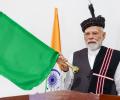
In the last 11 years, India and the world witnessed what he stood for, what he promised and did not deliver, and what he actually stood for and practised without fearing how history would judge him. Modi's tenure has been punctuated with headline-grabbing decisions, symbolic gestures, and stage-managed moments that continue to define his leadership and India's politics, points out Ramesh Menon.
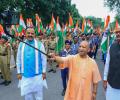
Uttar Pradesh Deputy Chief Minister Keshav Prasad Maurya has called for Aligarh to be renamed 'Harigarh', drawing parallels with the renaming of Ayodhya and Prayagraj. He also paid tribute to former CM Kalyan Singh and criticized the Samajwadi Party.

Senior BJP leaders and an expelled MLA have questioned the Karnataka government's decision to have author Banu Mushtaq inaugurate the Mysuru Dasara festivities, citing concerns about her faith and its appropriateness for a religious ceremony.

Karnataka Deputy Chief Minister D K Shivakumar accuses the BJP of politicizing the Dharmasthala 'multiple murders and burials' case, criticizing their protests and questioning their motives.

Unresolved succession plans and informal ownership structures are fuelling bitter family fights across India's corporate boardrooms.

Asked about the challenges of an interfaith marriage, she said, 'There are a lot of things that we just agree on, I think, especially when it comes to family life, how to raise our kids. And so I think the answer really is, we just talk a lot.'
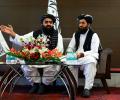
'During the 5-day visit, Amir Khan Muttaqi would have, conceivably, bumped into our powerful security agencies one way or another and some interaction would have ensued, which, in turn, can lead to future dealings.' 'Indeed, this will be the one crucial template of the Indo-Afghan relationship that Pakistan will be monitoring closely,' points Ambassador M K Bhadrakumar.
'She is a nice girl, simple, patient and affectionate. Because she is so empathetic, because she has the ability to feel for people, I am sure she will be able to solve the problems ordinary citizens face in this country.'

'A marriage is not an event for 'song and dance' and 'wining and dining' or an occasion to demand and exchange dowry and gifts by undue pressure leading to possible initiation of criminal proceedings thereafter'
In its order on March 22, the court said the Hindu Marriage Act merely provides for saptpadi (seven steps or saat pheras) as an essential ceremony of a marriage.

Karnataka Deputy Chief Minister D K Shivakumar has decided to remain silent and direct all inquiries to party spokespersons following criticism over various issues, including his singing of the RSS anthem and remarks about the Chamundeswari hill.

The government on Monday extended the due date for filing income tax returns (ITRs) for Assessment Year 2025-26 by a day to September 16 as technical glitches disrupted filings on the last day. A record over 7.3 crore ITRs were filed till September 15, surpassing last year's 7.28 crore, the Central Board of Direct Taxes (CBDT) said in a post on X.

Land grabbers have illegally occupied the land surrounding a 100-year-old Shiv temple near Tando Jam in Pakistan's Sindh province, obstructing access to the temple and starting construction on the surrounding land. The Hindu community representative, Shiva Kachhi, has appealed to the government to stop the illegal activities and protect the temple and other historical Hindu sites in Sindh.
